Show off your Figma projects and get feedback from the community.
Recently active
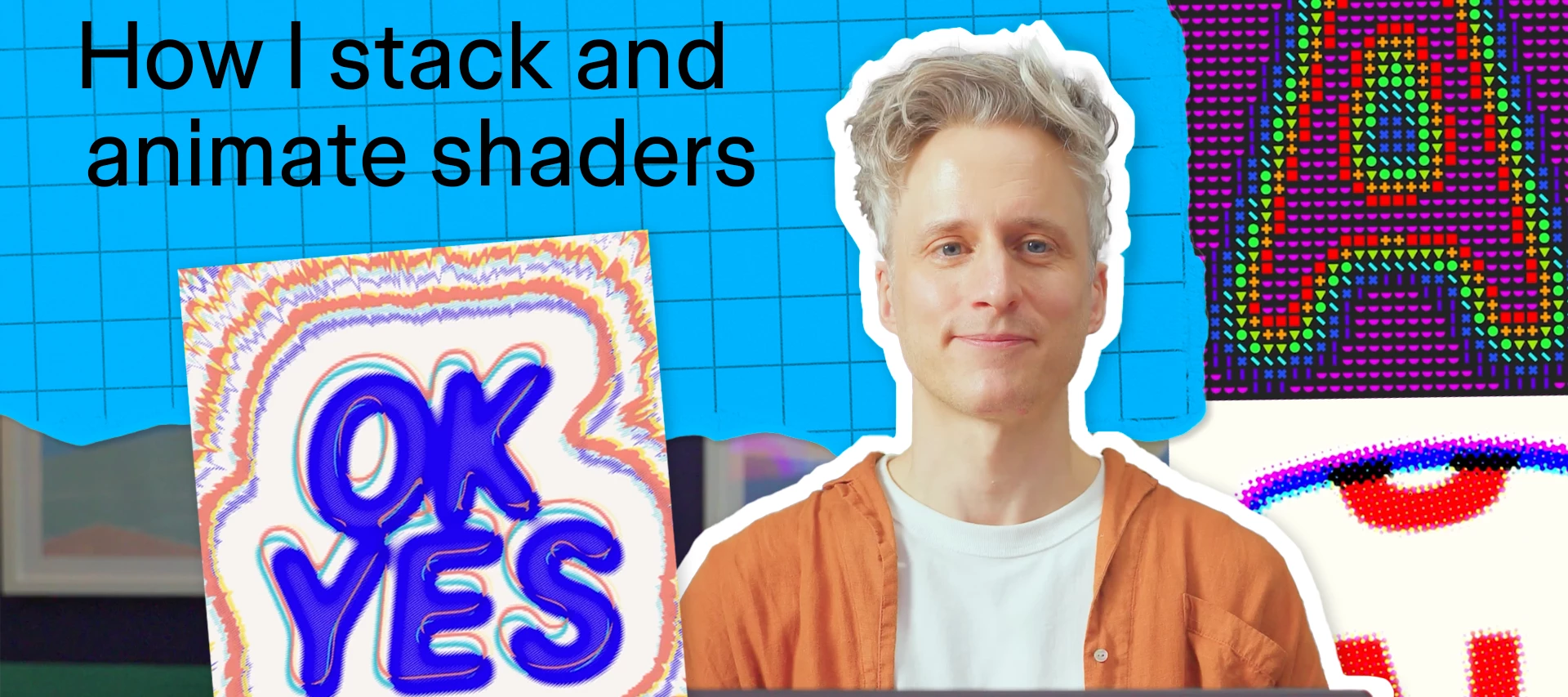
The newest episode of Show Your Work is live on YouTube!In this series, we hand designers the mic to walk through their work, their workflow, and have a little fun along the way. What you'll seeIn the below episode Piers Cowburn, Figma’s Director of Software Engineering, walks through how he's using shaders to bring his typography to life.How Piers approaches shaders as a creative material A peek at his real workflow, tools and thinking Fun examples you can try on your own. Want to watch more? The full Show Your Work playlist has every episode so far, and we have more on the way.Watched it? Tell us what you'd want to see next. We're always taking requests. Show us your creationsThe Figma Forum is a great place to discuss what you learned with others. Has this episode of Show Your Work inspired you to make your own creations? Show us!
Showcase Your Work is that category where you can show off your Figma creations, get feedback on them or simply promote them. Please do keep your posts somewhat related to Figma, avoid spam, and follow our Forum Guidelines, Figma Community Guidelines and Code of Conduct! Examples:✅ You can ❌ Avoid Ask for feedback on a design you created in Figma Design Posting content that does not relate to (or was not built in) Figma products Promote a plugin you’ve built that can help users in their Figma files Promoting products, services and events/meetups Share a Figma Slides template you’ve created Posting job descriptions or hiring calls
Figma’s built-in layer blur spreads the same amount in every direction. Real motion blur needs a direction and a trail, and it’s sharp at the front and fades out behind. Most people end up in Photoshop or After Effects for that, then export and re-import every time the design changes.Here’s how I do it inside Figma with Motiv Blur, a plugin I built.What you need: any layer, group or frame (a product shot, an icon, text, an illustration) and the Motiv Blur plugin. Step 1: Select your layerClick the object you want to put in motion. Any layer, group or frame works. Step 2: Run Motiv BlurOpen Actions (⌘/Ctrl + K), type Motiv Blur and press Enter. The plugin opens with a live preview of your selection. Step 3: Tune the blurWith Live Preview on, the canvas updates as you drag:Angle: the direction of motion Distance: how long the trail is Tail size: shrink the tail for a sense of depth and speed Tail / Head clarity: fade the trail out, keep the front crispYou can also drag the TAIL and HEAD
Hi everyone. I'm the maker of Photogma, a solo side project. Full disclosure: it's paid, with a free tier (details below).I built it for Figma designers who still receive PSDs and don't want to rebuild them by hand.The first two images are listing illustrations made from a demo file (a made-up serum ad): the headline comes in as a Figma text layer, gets rewritten, and goes back to PSD still as text. PSD/PSB → FigmaText: font, size, tracking, leading, mixed styles, point and paragraph text; rotated text stays editable Shapes: live rectangles (with per-corner radius) and ellipses, pen paths, gradient fills, dashed strokes Layer, clipping and group masks, plus vector masks on shape layers; blend modes Figma also has (others, like Dissolve, fall back to Normal); each artboard as its own frame Drop/inner shadows become Figma effects; color/gradient overlays become fills on text and shapes and are baked into image layers; glows are approximated with shadows Layer-style strokes become editabl
I built a VectorStock plugin for Figma—would love your feedbackHi everyone! I’m a Figma user and part of the VectorStock team. I’ve been working on bringing our SVG vector library into Figma, and I’m happy to share the new plugin with you.It lets you search for illustrations, icons, logo elements and other editable artwork, then add them directly to your Figma file. There are 1M+ free SVGs, alongside a larger collection of paid assets.You can search with keywords or describe the subject, style and colours you have in mind using AI-powered search. This helps you find existing artwork, which you can then recolour, resize and customise in Figma.Try VectorStock for FigmaHopefully it’s useful in your workflow. I’d love to hear what you think—particularly anything that feels awkward, features you’d like added, or ways we could improve the search. We’ll do our best to take your suggestions on board.Thanks for taking a look 🙂
Hi everyone. I built Sourceline because Figma shows a component's variants, but not which of your team's files use it. People have asked for this in Suggest a feature since 2021: https://forum.figma.com/suggest-a-feature-11/see-where-component-is-used-find-component-instances-across-files-17758 Sourceline is a widget you place next to a main component in your library file. It shows:How many team files and instances use the component Which of those files are active, quiet, or inactive A High, Medium, or Low impact badge, before you publish a change Every file that uses it, latest edit first, with its Dev Mode statusYou set it up once per library file. Results are saved in the file, so teammates see them without signing in. Later scans read only the files that changed.Two limits to know: the first scan takes about 4 minutes for every 60 files, because of Figma's API rate limit, and instances nested inside other instances are counted where their main component lives.It's free: https://www
Putting a design onto a tilted laptop or phone screen usually means leaving Figma: export, open Photoshop, Free Transform, export, re-import… and repeat every time the design changes.Here’s how I do it now without leaving Figma, using a plugin I built called Free Transform.What you need: a mockup photo, your design (any frame or image on the canvas), and the Free Transform plugin.Step 1: Draw the screen shapePick the Rectangle tool (R) and draw a rectangle roughly over the laptop screen. Double-click the rectangle (or press Enter) to edit its points. Drag each of the 4 corners onto the matching corner of the screen in the photo.You now have a 4-point shape that follows the screen’s perspective.Step 2: Open Free TransformKeep the shape selected, open Actions (⌘ / Ctrl + K) → Plugins & widgets → Free Transform.Step 3: Fit to Quad, then click your designIn the Transform tab, click Fit to Quad (next to Distort). The button changes to “Select a top object…”. Now click your design on the
Hi all, I built this plugin for a problem I kept running into: a file’s variable bindings point to the wrong collection. For example a duplicated project still linked to the original client’s library, a library that got restructured, or a file that should stop depending on an external library.Variable Relink repoints variable and explicit mode bindings from a Source collection to a Target collection (local or from a library), across the current page or just your selection. It matches by exact name (and type for variables). Anything it can’t match safely is not guessed: you get a report split into what relinked automatically, what needs a manual pick, and what can’t be fixed from the plugin. A full Revert is one click away.Good to know: it works per page or selection (not the whole file at once), it handles bindings on layers (it does not edit styles), and it makes no network requests.Free: https://www.figma.com/community/plugin/1675171359714547127/variable-relinkI’d love feedback, espe
Your brand library is in Figma. So is the latest approved campaign.Your team knows where to find the right logo and who signed off on the design. Then you’re asked to turn that work into a printed brochure.If you’re a small team, “just use InDesign” can mean getting another software purchase approved and finding someone who knows the tool. You already have Figma seats, and the designer doing the work is comfortable there.There’s also the second set of assets to maintain. Figma is your source of truth: the place your team keeps the approved brand assets. Moving to another layout tool means deciding which files to bring over and keeping track of later changes.We think teams should be able to keep that starting point. The missing pieces show up when the design needs print setup or starts behaving like a publication.I’m part of the team behind Printery. We started with Printery for Figma in 2025, adding print setup and export options such as bleed, crop marks and CMYK output. Other print p
Free Figma Plugin ‘Frame Name Control’Hi everyone,When you review a layout or share your screen, the name labels above frames ("Frame 1", "Frame 2", and so on) can get in the way. I made a free plugin for Figma that hides them with one click. Click again, and the original names come back. 🔗 Community page: https://www.figma.com/community/plugin/1688801901935556430 What it does - Hides frame name labels on the canvas and restores them with a second click - Remembers the original names, even after you close and reopen the file - Works on the current page, all pages, or only the layers you select - Adds a Hide/Show Frame Name button under Tools in the right panel after the first run - Runs from a keyboard shortcut such as ⌥⌘F on macOS, after a one-time setup in System Settings (the plugin window shows the steps) I'd love to hear how it works in your files and what you'd change. 🤗
Hi everyone, I'm the developer of Chart Studio. I built it for the point in dashboard and presentation work where sample charts need to become charts from real data.Choose a chart, paste a table or import CSV/JSON, adjust colors, fonts, labels and axes, then insert vector output with optional native Figma text layers. For example, turn monthly revenue data into a grouped bar chart and match it to your dashboard's palette.The 12 free chart types include line, area, bar, pie, donut, scatter and radar. These support unlimited insertion, no watermarks, and standard SVG, PNG and data exports.There is also an optional one-time Pro purchase on Gumroad. It unlocks all 43 chart types, including Sankey, treemap, heatmap and waterfall, plus XLSX and public Google Sheets imports, PDF and offline interactive HTML exports. The free chart types do not require a license.A few practical limits: insertion creates a new chart rather than overwriting the existing one. Online imports are one-time imports,
Hi everyone — I'm the developer of Sketchbridge, a Figma Design plugin built around the open-source Excalidraw editor.I made it for the early stages of product work: sketch a user flow, wireframe or journey map, then keep working with editable objects in the design file.One example is the free Signup flow template. Open it in the plugin, change the steps, labels and colors on the canvas, click Done, and choose Apply to Figma. The result contains native text and vector paths that you can adjust in Figma.There are 18 free original templates covering brainstorming, user flows, wireframes, journey maps, planning and architecture. Canvas editing is also free; no purchase is required to use those templates.For transparency, there is an optional $9.99 one-time pack of 12 additional templates for SaaS, AI workflows and workshops. Free and paid templates use the same editing and conversion tools.Current limits: this works in Figma Design. Arrows become vector paths and won't reconnect automatic
Our last typography update touched 14 different CSS files. Three of them broke the production build because a developer missed a tiny change to headingXl. We had changed the line height in Figma from 120% to 110%. The manual handoff process was completely failing us.I got so annoyed tracking down these mismatches that I built a tiny workflow tool to fix it. We actually deleted our entire #design-qa Slack channel because Figma variables now just export directly to GitHub PRs automatically.Figma Community: https://www.figma.com/community/plugin/1561389071519901700?utm_source=figma-forum&utm_medium=post&utm_campaign=botWebsite: https://ds-sync.netlify.app?utm_source=figma-forum&utm_medium=post&utm_campaign=botHow is everyone else handling token name changes without breaking developer pipelines?
Hi all! I kept seeing the same image-fill requests here on the forum (anchoring, bulk swapping, consistent crops, getting the CSS out), so I built a small set of plugins for them. Full disclosure: they're mine, and they're paid (one-time).- Image Anchor: pin an image fill to any edge, corner or focal point, like CSS object-position, and re-align it after a resize. https://www.figma.com/community/plugin/1689393299581273475- Bulk Image Swap: replace the images in many layers at once, in the order you pick them or by file name, keeping each layer's size and crop. https://www.figma.com/community/plugin/1689391431052577150- Batch Aspect Crop: give many image layers one aspect ratio (1:1, 4:3, 16:9 or custom), cropped around the point you choose instead of stretched. https://www.figma.com/community/plugin/1689384234670276965- Image CSS Export: copy object-fit, object-position and aspect-ratio for selected image layers as CSS or Tailwind. https://www.figma.com/community/plugin/168938909677250
Hey everyone 👋Figma's PDF export and I have a complicated relationship. My 48-slide deck came out at 88.2 MB: too heavy to email, too heavy for most upload forms. So I built (ok, co-built, let's be honest) a little plugin: PDFShock. It flattens each slide into a compressed image, then puts the real text back on top. You can still select and search your PDF, and your links stay clickable. On that same deck:→ Figma export: 88.2 MB→ PDFShock Balanced: 16.5 MB, still sharp on screen→ PDFShock Smallest: 7.1 MB It works in Figma Design and Figma Slides, and everything runs locally: your file never leaves Figma. Then I got a bit carried away 😅 There's now a website too, for PDFs you've already exported (Figma, Canva, Keynote…). It compresses them right in your browser, nothing gets uploaded. And there's a wizard who ⚡ zaps ⚡ your PDFs, drops a few punchlines and gives you a tiny game to play while your file compresses. Completely useless, therefore absolutely essential. → Plugin: https://ww
I got a bit bored and created a fun plugin called Phantom Cursor. It simulates a “fake collaborator” experience, with multiple cursors flying around your canvas, pretending to interact with your designs like real team members. I’m just curious if this is something anyone would be interested in?. 😂
Hi everyone 👋My brother Mazen Awaideh and I built Structify, a Figma plugin for designers who are tired of jumping between Jira and Figma: opening tickets, reading, designing, then going back to comment and update.What it does:- Connects to Jira and GitLab and loads your tickets inside Figma- Lets you set industry, device and company context- Generates a structured design workspace from each ticket: core flow, touchpoints, edge cases, error/empty/loading states, security, accessibility, plus a screen checklist- Submits your work back to the ticket- Saves everything in History, so you can revisit any ticket or reuse a structure on a new oneIt's free. You bring your own AI API key, so there are no usage limits from our side.To test it, we created an imaginary Arabic-first home-services app in Jira with 15 tickets, from fully specified stories to one that just says "search needs to be better", like real tickets do.🎥 1-min walkthrough: https://youtu.be/PN85rZUh6vQ🔗 Plugin: https://www.f
We design type, and we proof a lot of it in Figma. So we built the two tools we kept wishing we had.Font RefreshYou fix a curve, export a new version, switch back to Figma… and nothing has changed. Figma only redraws a text layer when you edit it. Font Refresh redraws every text layer in the file, on the page or in your selection, in one click. Your text, styles and layout stay untouched. Specimen MakerPick a family, choose three colours, and get a complete A5 specimen booklet, print-ready with bleed. Inside: cover, character set, every glyph in its own square, all styles with full alphabets, pangrams in eight languages, a size waterfall, headlines and running text. Every page is a normal Figma frame, so you can edit all of it. Made for type designers, by type designers.
Text flows around images and shapes. Icons and components sit inside the line. Reset brings the original text back. Free: 5 texts a day.https://www.figma.com/community/plugin/1687782073408546359
Updating our site this morning and didn't see any resources on Figma for this so quick created it and published for anyone to use. Simple “Sign in with” and “Continue with” following OpenAI’s brand guidelines.2 component sets included: one with flattened text (if you don't have the typeface)and one with the editable text using the typeface.Typeface link is in the file and in the file description.Hopefully saves you 5-10 minutes of your day.👉🏽 Figma file here
Hi everyone 👋I recently released TextFit for Figma Buzz.I built it around a problem I kept seeing in Buzz workflows: you create a branded template, then use Bulk Create, localization, or simply change the copy — and suddenly some headlines no longer fit the original layout.TextFit lets you:Freeze the original text areas so longer copy doesn’t push the layout Scan one asset, a selection, or all assets for text overflow Fix overflowing text automatically by reducing the font size until it fits Set a minimum font size Revert TextFit’s typography changes if neededA typical workflow is:Freeze → Bulk Create / localize / change copy → Scan → Fix It’s particularly useful when generating lots of campaign variants or translating assets into languages where the copy becomes longer.You can try every feature free for 7 days. After that, it’s a $7 one-time purchase:https://www.figma.com/community/plugin/1685810922519235112/textfit-for-figma-buzzI’m the developer and it’s very new, so I’d especiall
I built this Figma plugin to check app icons at small sizes and catch clipping before handoff. The free features provide platform-sized frames and mask previews. The full version is $5 once and adds 64, 40 and 24 px previews, masks on the canvas, clipping checks, a handoff fix list, and unlimited frames.https://www.figma.com/community/plugin/1683316299414206723
Hi everyone. I built Slimline because Figma's export has no WebP or AVIF option, and the compression plugins I tried put export behind a subscription. What it does:Exports WebP, AVIF, JPG, or PNG from any selected layers Keeps each file under a size you set Shows a before and after preview at 100% Runs on your computer, with no account and no server It's free: https://www.figma.com/community/plugin/1685398335415882876/slimline I'd value feedback from anyone who exports images for the web. What's missing for your workflow?
Hi everyone. I built Anchorline because drawing user-flow arrows by hand is the slowest part of preparing a handoff file, and redrawing them every time a screen moves is worse.Select your frames in the order people move through them, click Create flow, and Anchorline connects them with clean, editable arrows.What it does:Follows the order you select, so the flow reads the way you think about it Routes around any frame, component, or instance in the way, at right angles Pins either end of an arrow to one of 12 points on a screen, or leaves it on Auto Connects a button inside a screen to the screen it opens Adds step labels, such as "Tap Sign in", as ordinary text layers Follows your screens while it's open, and Update arrows catches up on anything that moved Hides every arrow on a page in one switch, for clean exportsEvery action is one undo step, and the arrows are plain Figma vectors. It's free, with no account, no limits, and no network access.Anchorline on Figma CommunityI'd value f
Hi all 👋 I build banner ads and since Figma Motion launched I've been animating everything on the new timeline. But when it came to delivering ads, I was stuck: Motion exports MP4, GIF, WebM and SVG, and none of those can be uploaded as an HTML5 display ad.So I built a small plugin that does just that one job: Figma to HTML5 Display Ads. How it worksAnimate your banner in Figma Motion as normal Export it as an animated SVG (Export → Animated → SVG) Open the plugin and upload your SVG Download a clean, self-contained HTML5 zip, ready for Google Ads or any HTML5 ad platformThat's it. No new timeline to learn and no rebuilding your animation. It uses the Motion animation you've already made. Why I made it simpleMost banner tools charge a monthly per-seat subscription and bury the export under dozens of features. This one keeps it clean and simple for a one off $50. No subscription.Try it here: https://www.figma.com/community/plugin/1652278713752782198I would really love feedback from any
Already have an account? Login
Enter your E-mail address. We'll send you an e-mail with instructions to reset your password.